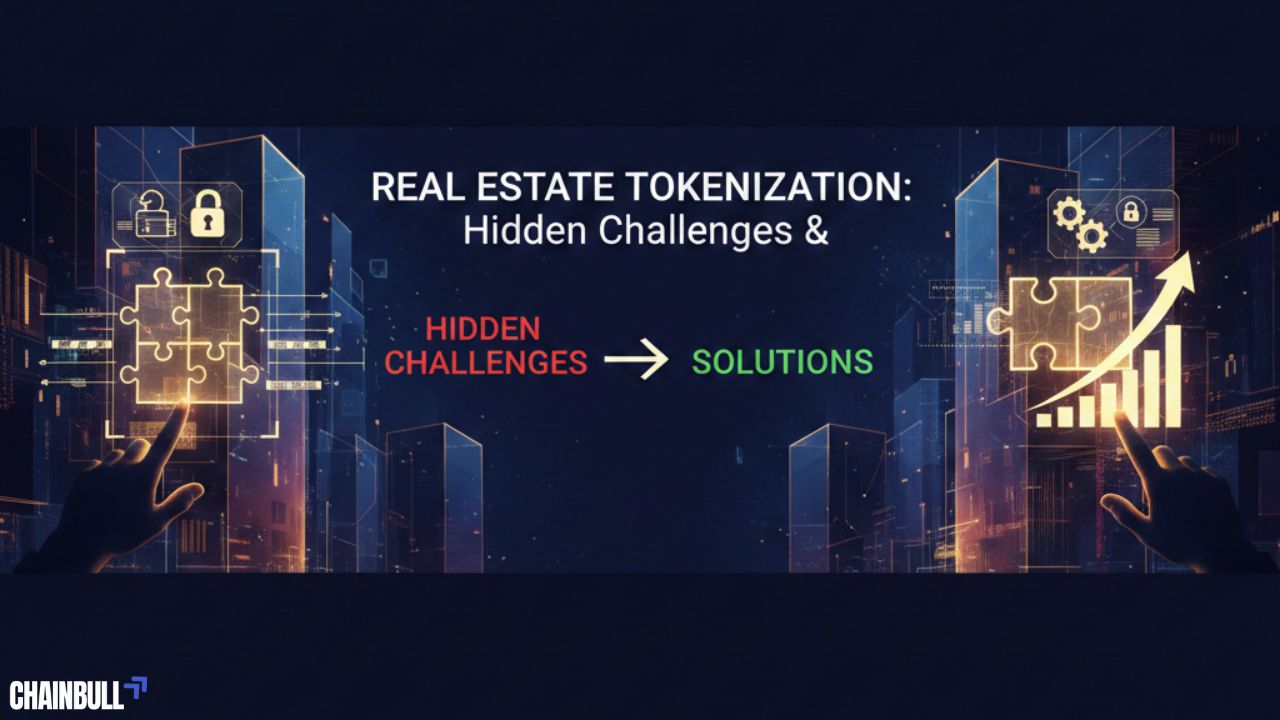
In 2026, real estate tokenization is no longer a concept limited to tech conferences and pilot projects. It is a global shift redefining how property is owned, invested in, and traded. Yet, for all its promise, launching a real estate tokenization platform isn’t as simple as deploying smart contracts or listing properties on-chain.
While the advantages, fractional ownership, liquidity, and borderless investment are well known. The challenges behind building a compliant, safe, and scalable tokenization platform are often underestimated.
In this blog, we will explore the hidden roadblocks business faces when entering this space. Also, we will show how to overcome them with the right strategy and technical support.
Before diving into the obstacle, let’s have a look at the basic concept. Real estate tokenization is the process of converting ownership of real estate assets into digital tokens stored and managed on a blockchain. Each token represents a fraction of a property and can be bought, sold, or traded like any other digital asset.
With this type of model, investors gain access to the real estate without even buying an entire building, and property owners unlock liquidity without even waiting for full asset sales. But turning this model into a functioning platform includes more than token generation; it needs solving for technology, regulation, finance, and user experience.
Among all barriers to real estate investment, compliance is probably the largest obstacle,given the amount of regulation Real Estate has relative to other asset classes. As Real Estate Tokens fall under the jurisdiction of Securities Regulations in most countries, understanding the Regulations imposed by each jurisdiction where you are working is paramount.
The Problem: Most Jurisdictions are treating Real Estate Tokens as if they are securities and therefore require registration with the SEC or other Regulatory Body, have Anti-Money Laundering (AML) and Know Your Customer (KYC) requirements, conduct Investor Accreditation Checks and implement Data Privacy protections.
The Solution: Work with a legal partner experienced in real estate tokenization development services across regions such as the U.S., the EU, the UAE, and Singapore. Implement modular compliance layers within your platform that can be tailored to different user locations and asset classes.
In 2026, platforms that integrate real-time compliance monitoring (via smart contracts and third-party APIs) are becoming industry standard.
Many times, early-stage projects build their smart contract without a scalable design either due to high gas prices or limited flexibility from the smart contract’s logic.
Even in 2026, many property investors are still unfamiliar or uncomfortable with crypto-related systems.
You might also want to integrate features from your best real estate tokenization platform, such as AI-powered portfolio tracking or property reports, to create additional value for hesitant users.
Tokenized real estate must have active secondary markets to create liquidity; failure to generate positive volume and build trust renders these platforms “walled gardens.”
In some regions, regulators now allow decentralized exchange models for tokenized real estate, provided transparency and reporting are maintained.
Real Estate is an asset category on which the value can be multiple millions of dollars and therefore a single security breach, key loss or audit discrepancy could cause a loss to many.
Chainalysis’ 2026 Report states that 80% of platform closures in the last 18 months were due to inadequate Security Management rather than a lack of User Demand.
While it might seem appealing to use generic solutions or clones built on open-source projects, long-term success comes from developing customized platforms. By working with a firm that specializes in real estate tokenization development services, you have the ability to:
A number of successful platforms, launched between 2025 and early 2026, followed a similar practice:
All learned to focus on solving actual problems in the real estate market before scaling out their businesses. New entrants to the market should take note of these key learnings.
Real estate tokenization may be the future, but the path to launching a successful platform is filled with hidden challenges; legal, technical, financial, and user experience-related. Without solving these, even the best marketing won’t generate sustainable growth.
However, these obstacles are not roadblocks; they are invitations to build better, secure, and more inclusive platforms. With the right planning and partners, your project can stand out in a rapidly growing digital property ecosystem.
If you are planning to launch or upgrade your tokenized property platform, Chainbull offers tailored, end-to-end development services; from smart contract deployment to investor experience design.

Enter your email → Get instant download.