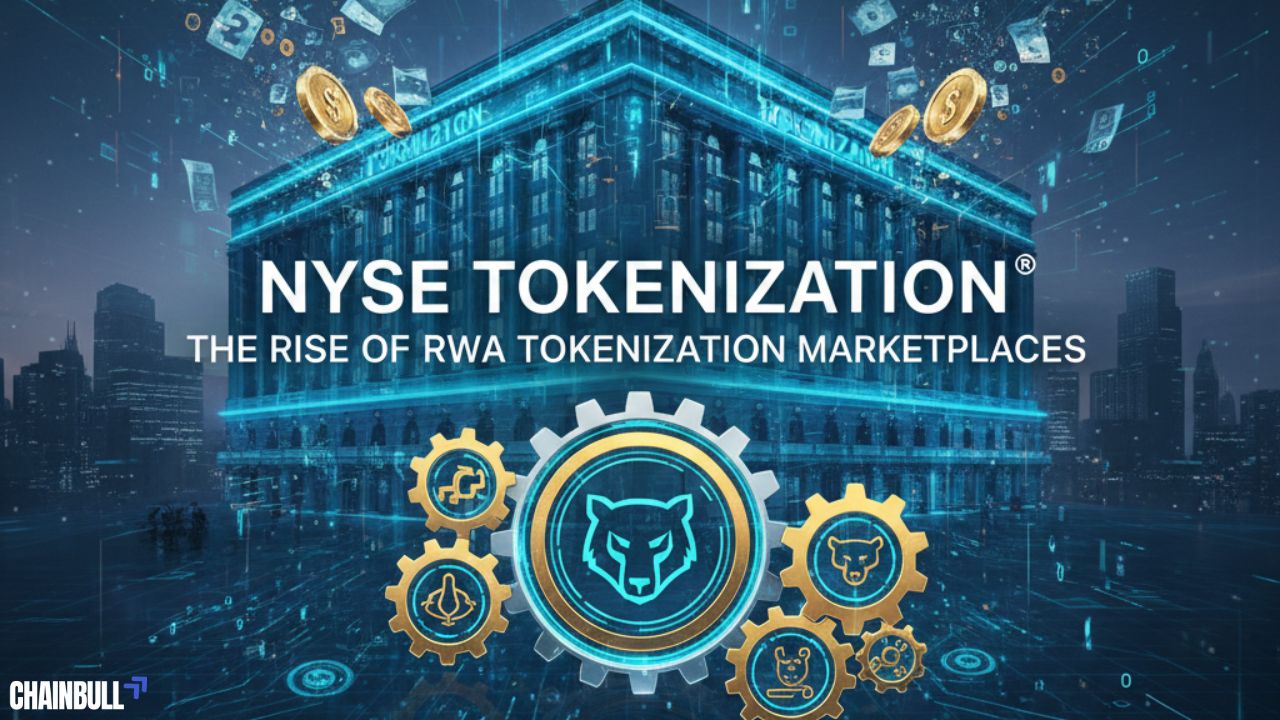
The sudden rise in searches for NYSE tokenization signals a major shift in how people think about ownership, investing, and financial infrastructure.
While the New York Stock Exchange itself has not officially tokenized public equities, global institutions, financial innovators, and regulators are actively exploring how blockchain technology can modernize traditional markets.
This movement is part of a much bigger trend known as RWA (Real-World Asset) tokenization—and it goes far beyond stocks or real estate.
What Is RWA Tokenization? (Explained Simply)
RWA tokenization is the process of converting real-world assets into digital tokens on a blockchain.
These tokens can represent:
Instead of relying on paperwork, intermediaries, and slow settlement processes, tokenization uses smart contracts and transparent digital records.
Why “NYSE Tokenization” Is Trending Right Now
Interest in NYSE tokenization is growing because traditional financial systems are under pressure to evolve.
1. Demand for Faster & Cheaper Markets
Traditional markets face:
Tokenization offers near-instant settlement and improved efficiency.
2. Institutional & Regulatory Experiments
Financial institutions are testing:
3. Proven Success of Private RWA Models
While public market tokenization is still developing, private asset tokenization is already live and generating value.
RWA Tokenization Is Bigger Than Real Estate
Real estate is often the first example people think of—but RWA tokenization spans multiple asset categories.
Modern tokenization platforms are built to support diverse real-world assets, not just property.
Major RWA Asset Classes Being Tokenized Today
1. Real Estate Tokenization
Properties can be split into digital tokens that allow:
This remains the most widely adopted RWA use case.
2. Company Profit-Sharing & Revenue Tokenization
Businesses can tokenize:
This model allows companies to raise capital while offering transparent, automated profit participation to investors.
3. Crude Oil & Commodity Tokenization
Physical commodities such as:
Crude oil
Energy reserves
Precious metals
can be tokenized to enable fractional ownership, easier trading, and transparent tracking of value.
4. Luxury & High-Value Asset Tokenization (Private Yachts, Aircraft, etc.)
High-value assets are ideal for tokenization because they are:
Expensive to acquire
Illiquid by nature
Difficult to co-own
Tokenization allows shared ownership, revenue generation, and flexible exit options.
What Is an RWA Tokenization Marketplace?
An RWA tokenization marketplace is a digital platform where real-world assets can be:
These platforms form the backbone of future financial systems, including potential tokenized public markets.
How Chainbull Enables RWA Tokenization Marketplaces
Chainbull builds end-to-end tokenization infrastructure that supports multiple asset classes under one platform.
Core Capabilities
Asset Tokenization Platform Development
Platforms designed to handle:
Multiple asset types
Fractional ownership
Investor dashboards
Scalable architecture
Smart Contract Automation
Smart contracts manage:
Custom Token Models
Including:
Compliance-Ready Architecture
Platforms are designed with:
Role-based access control
Modular compliance layers
KYC and AML integration support
How RWA Marketplaces Relate to NYSE Tokenization
Discussions around NYSE tokenization show where traditional finance is heading.
RWA tokenization marketplaces demonstrate what is already working today.
Private assets, commodities, and alternative investments are being tokenized using the same core principles that will eventually power tokenized public markets.
Who Should Consider RWA Tokenization?
RWA tokenization is ideal for:
If an asset generates value, it can be tokenized.
Final Thoughts: The Future Is Tokenized Markets
NYSE tokenization represents the future direction of global finance.
RWA tokenization marketplaces represent the current reality.
Businesses that move early will shape how ownership, investing, and asset liquidity work in the years ahead.
Chainbull builds the infrastructure that makes this future possible.