Real estate has always been associated with stability and long-term wealth. Yet, for most people, owning property feels more like a dream than a realistic investment option. High prices, large down payments, long lock-in periods, and constant management responsibilities make traditional real estate difficult to access.
The gap between interest and accessibility is exactly why a model is gaining attention. Instead of buying an entire property, investors are exploring tokenizing real estate to earn passive income without carrying the full burden of ownership.
This approach doesn’t change real estate itself. It changes who can participate and how easily they can do so.
Most investors understand the appeal of real estate. Rental income offers a steady cash flow, while property value can grow over time. However, the reality often looks very different.
To get started, investors usually need large upfront capital. On top of that, buying property includes legal checks, financing approvals, and ongoing maintenance. Even after buying, income is not always predictable. Vacancies, repairs, and market conditions can affect returns.
For many people, the biggest challenge is not a lack of interest. It is a lack of flexibility. Real estate feels slow, rigid, and expensive, resulting in potential investors looking for alternatives that still give exposure to the property-based benefits.
This is where the tokenization starts to make sense.
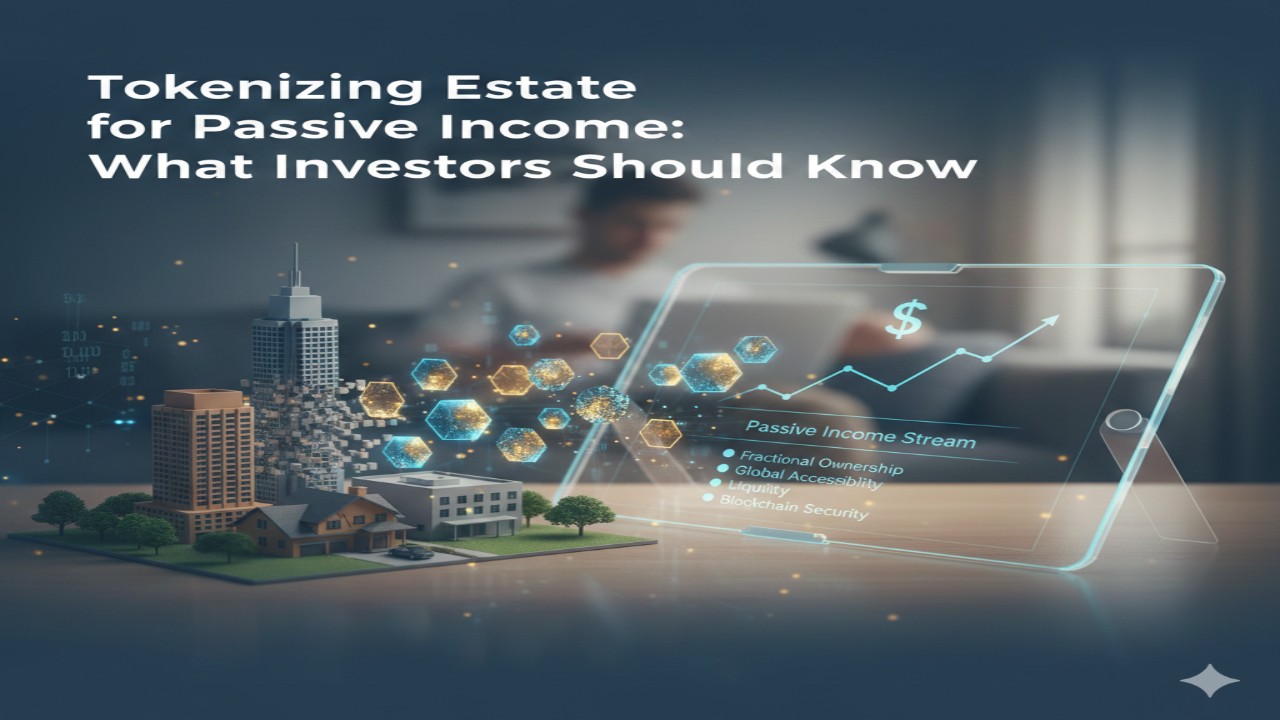
Tokenization simplifies real estate ownership by breaking it into smaller, digital units called tokens. Each token represents a fractional share of the property’s value and income rights.
Instead of buying a full apartment or building, investors purchase tokens that give them proportional ownership. These tokens are recorded on a blockchain, which ensures transparency and accurate ownership records.
The entire process is managed through the real estate tokenization platforms, which handle the legal structuring, digital issuance, compliance, and income distribution. From an investor’s point of view, this removes many of the operational hurdles associated with traditional property investment.
Think of it this way.
Rather than owning one property outright, you can own small portions of various properties at the same time.
It is important to set expectations correctly. Tokenization doesn’t eliminate real estate risks, nor does it guarantee profits. What it changes is access.
The properties remain the physical assets. They still generate income through rent and are affected by market conditions. Tokenization changes how ownership is divided and transferred.
This model lowers entry barriers. Investors can simply participate with smaller amounts of capital. It also enhances the flexibility, as transferring tokens is generally easier than selling a physical property.
Therefore, tokenization is about making participation more practical for a wider group of investors.
This is where curiosity turns into real interest. Most tokenized properties are income-generating assets. These may involve residential rentals, office spaces, or commercial buildings.
The income flow is simple:
If you own 1% of the tokens, you receive 1% of the income. You are not included in:
Quick reality check
Passive income still relies on property performance. Tokenization simplifies ownership, not outcomes. According to the industry reports, tokenized real estate projects have shown 30-50% lower operational costs compared to traditional ownership models, mainly due to automation and shared management.
Blockchain is not the star of the show. It’s the support system. Ownership records are stored in the chain, making them transparent and tamper-proof. Transactions are traceable, and ownership transfers are automatically recorded.
Smart contracts help automate revenue distribution and ownership updates. This reduces delays and manual errors.
However, blockchain does not replace legal frameworks. Property still exists in the physical world. Proper contracts, compliance, and professional oversight remain important. Technology improves efficiency. It does not remove responsibility.
Platforms are the bridge between physical property and digital ownership.
A reliable platform:
Transparency is important here. Investors should clearly understand how income is calculated, what fees apply, and how to exit.
Security is also important. Platforms must protect wallets, smart contract,s and user data. Poor security can undermine even the best investment models. Choosing the right platform is as important as selecting the right property.
This is where investors should slow down. In the majority of cases, token holders don’t own the property directly. Instead, they own a token representing shares in a legal entity that owns the property. This simply affects:
Additionally, many tokenized offerings are fully under securities regulations. Compliance varies by region, and portals must operate within the legal limitations. Before investing, investors should know about:
Clarity here reduces the surprises later.
Tokenized real estate aligns well with passive-income goals. Key perks include:
According to the industry stats, fractional ownership models can enhance investor participation by up to 60%, mainly due to accessibility and flexibility. These perks don’t eliminate risk, but they make real estate more manageable for a wider audience.
Every investment has trade-offs. Market risk remains. Property values and rental earnings can change. Liquidity risk exists if secondary markets are limited. Technical risks may arise from portal outages or smart contract issues.
Understanding these risks is not negative; it is part of informed investing. Balancing expectations leads to better long-term outcomes.
Tokenized real estate works best as a part of a diversified strategy. For income-focused investors, it complements other passive assets. It offers real asset exposure without direct management.
However, over-allocation should be ignored. Smart investors treat tokenized property as one component, not the entire plan. Patience matters more than speculation here.
Tokenization of real estate is advancing steadily. Regulatory clarity is enhancing. Portals are becoming more mature. Institutional interest is increasing. According to the market forecasts, the global tokenized real estate market could exceed $1 trillion in value by 2030. This growth will not be overnight. It will be gradual, structured, and regulation-driven. Tokenization represents a long-term shift in how ownership and access are defined.
Tokenized real estate doesn’t promise shortcuts. It offers access. By lowering the entry barriers and simplifying ownership, it opens real estate investing to a wider audience. Success depends on understanding the structure, choosing reliable platforms, and maintaining realistic expectations.
At the end, the real value of tokenization of real estate lies in how thoughtfully it is implemented. For investors exploring passive income with flexibility and diversification, this model can open meaningful opportunities when approached with transparency and patience.
If you are looking to explore or build solutions in this space, Chainbull can help you navigate the journey. To discuss and know more, contact us. We can support your vision with the right technology and strategy.

Enter your email → Get instant download.