Blockchain is one of the most discussed technologies today, yet many people still struggle to understand what it actually is, how it works, and why it matters. In this guide, we break down blockchain in a simple, practical way – focusing on real understanding rather than technical buzzwords.
Blockchain is quietly powering cryptocurrencies, DeFi, NFTs, supply chains, gaming, healthcare records, and even AI data verification. Yet most explanations online are either too technical or too shallow.
This guide fixes that.
By the end of this article, you’ll understand:
What blockchain actually is (in plain English)
How blockchain works step by step
Why blockchain is secure and trustless
Real-world blockchain use cases
What a blockchain developer does
Whether blockchain is still worth learning in 2026
Blockchain Definition (Simple Explanation)
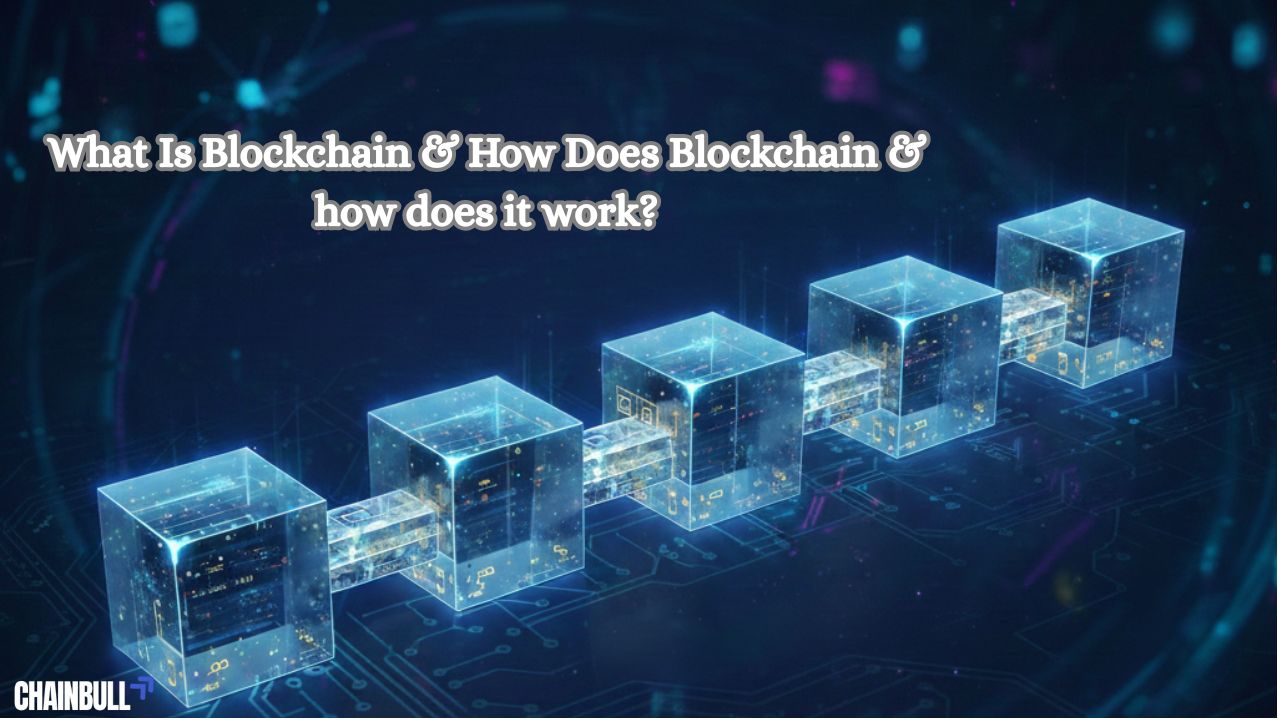
Blockchain is a decentralized digital ledger that records transactions across multiple computers so that the data cannot be changed, hacked, or manipulated.
Instead of storing information in one central database (like a bank server), blockchain stores data in blocks that are linked together in a chain and shared across a global network.
👉 Think of blockchain as a Google Sheet:
That’s the core innovation.
What Is Blockchain and How Does It Work?
Let’s break down how blockchain works step by step.
1. A Transaction Is Created
Someone sends data or value (for example, crypto, a contract, or asset ownership).
2. The Transaction Is Broadcast
The transaction is sent to a network of computers called nodes.
3. Validation by the Network
Nodes verify the transaction using consensus mechanisms like:
4. Transaction Is Added to a Block
Verified transactions are grouped into a block.
5. Block Is Linked to the Chain
Each block contains:
This creates an unbreakable chain.
6. Blockchain Is Updated Everywhere
Every node updates its copy of the ledger — instantly.
✔️ No middleman ✔️ No manual verification ✔️ No single point of failure
Why Blockchain Is Secure
Blockchain security comes from cryptography + decentralization.
Key Security Features:
Immutability – Once recorded, data cannot be changed
Transparency – Anyone can verify transactions
Decentralization – No central server to attack
Encryption – Data is protected using cryptographic hashes
To hack a blockchain, you’d need to control more than 51% of the network – which is nearly impossible for large blockchains.
Types of Blockchain
1. Public Blockchain
Open and permissionless (Bitcoin, Ethereum)
2. Private Blockchain
Controlled by an organization (Enterprises)
3. Consortium Blockchain
Shared between multiple organizations
4. Hybrid Blockchain
Mix of public + private features
Real-World Blockchain Use Cases
Blockchain is far more than crypto.
🔹 Cryptocurrency & Payments
Fast, borderless, trustless payments
🔹 DeFi (Decentralized Finance)
Lending, staking, and trading without banks
🔹 NFTs & Digital Ownership
Proving ownership of digital assets
🔹 Supply Chain Tracking
Tracking goods from origin to delivery
🔹 Healthcare
Secure patient data sharing
🔹 Gaming & Metaverse
True asset ownership inside games
What Does a Blockchain Developer Do?
A blockchain developer builds decentralized applications (dApps), smart contracts, and blockchain infrastructure.
Skills Required:
Solidity / Rust / Go
Smart contracts
Web3 frameworks
Cryptography basics
Blockchain architecture
Average Demand (USA):
Blockchain developers remain among the highest-paid tech roles, especially in Web3, AI + blockchain, and DeFi sectors.
Is Blockchain Still Worth Learning in 2026?
Short answer: Yes – but with clarity.
Blockchain isn’t about hype anymore. It’s about:
Companies are now hiring developers who understand both blockchain and real-world business problems.
Common Blockchain Myths (Busted)
❌ Blockchain = Bitcoin only
❌ Blockchain is illegal
❌ Blockchain has no real use
❌ Blockchain is dying
All false.
Blockchain is infrastructure – like the internet in the early 2000s.
How Chainbull Helps Businesses Use Blockchain
At Chainbull, we help startups and enterprises:
Build secure blockchain products
Develop scalable Web3 applications
Launch crypto & DeFi platforms
Improve visibility through blockchain-focused SEO
We don’t just build – we help projects grow, rank, and scale.
Final Thoughts
If you were searching for:
You now have a clear, practical understanding.
Blockchain isn’t magic – it’s trust, automated by code.
And it’s shaping the future faster than most people realize.