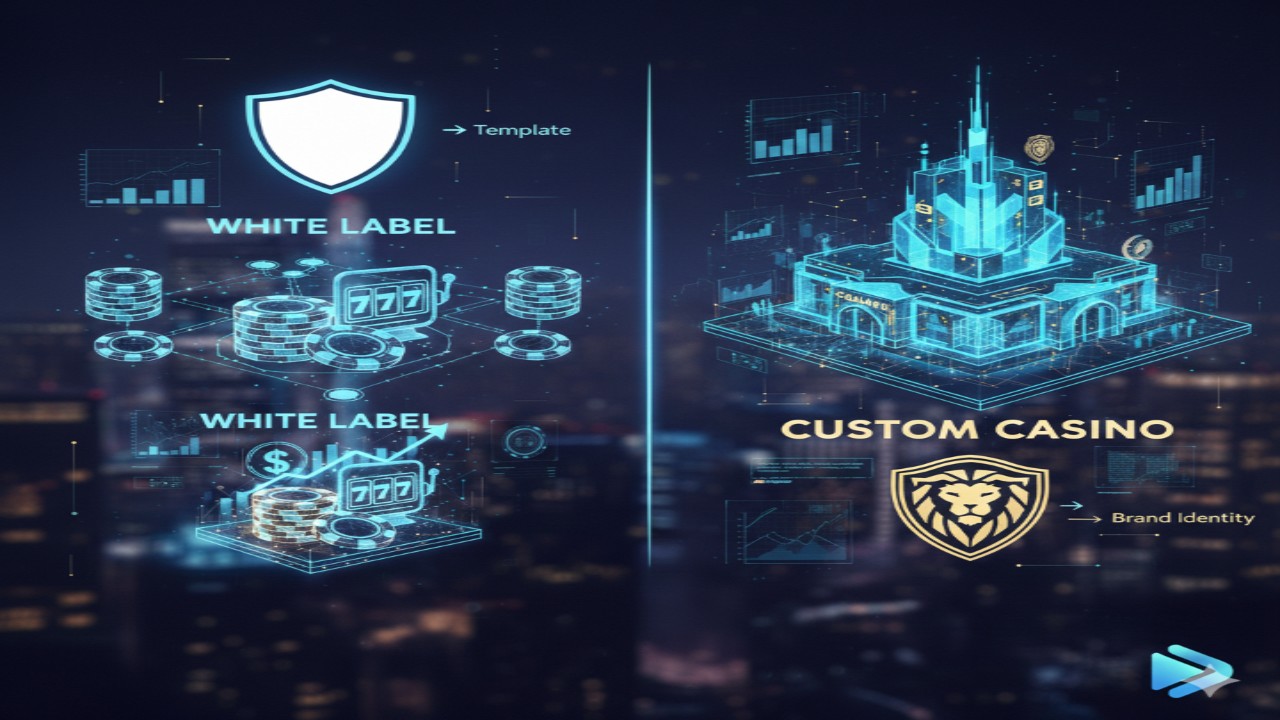
Launching an online casino is not just a technical project- it is a long-term business decision that affects branding, revenue control, scalability, and market positioning. One of the earliest and most crucial choices operators face is whether to launch with a white-label solution or invest in a custom-built casino platform.
In 2026, both models are widely used, but they serve very unique business goals. Modern casino gaming development has made both approaches faster and more accessible, yet the trade-offs between speed and ownership remain significant.
In this guide, we will break down the real differences between white-label and custom casinos so you can determine which model fits your strategy, budget, and growth vision.
Two Casino Models: Two Very Different Business Paths
At a high level, white-label casinos are designed for fast entry, while custom casinos are developed for long-term control. However, the real differences become clearer when you look at how each model handles ownership, flexibility, cost structure, and scalability.
A white-label casino allows operators to launch faster using a pre-built platform owned by a third-party provider. The casino runs under your brand, but the technology, infrastructure, and core systems remain controlled by the provider.
A custom casino, on the other hand, is built specifically for one operator. The portal architecture, design, and backend logic are customized to business needs, providing full control and independence.
Speed vs Strategy: What Are You Optimizing For?
White-label casinos are optimized for speed. They are ideal for operators who want to test a market, validate demand, or enter faster without heavy upfront investment. The setup timelines are short because the technology already exists.
Custom casinos are optimized for strategy. They take longer to launch but provide freedom to build unique features, control monetization, and scale withoutboundariess. This model suits businesses that view their casino as a long-term asset rather than a short-term opportunity.
The key question is not which model is quick, but which aligns with where you want the business to be in 3-5 years.
Feature-by-Feature Comparison
Below is a clear comparison table to show how the two models differ across critical business and technical factors.
Aspect | White Label Casino | Custom Casino |
Platform ownership | Owned by the provider | Fully owned by the operator |
Launch speed | Very fast | Moderate |
Initial investment | Lower upfront | High upfront |
Revenue sharing | Usually required | Not required |
Customization | Limited | Full |
Branding control | Basic | Complete |
Scalability | Provider-dependent | Fully scalable |
Technology flexibility | Restricted | Unlimited |
Long-term costs | Increase over time | More cost-efficient at scale |
Market differentiation | Low | High |
This comparison shows that the choice is less about technology and more about venture control and long-term planning.
Cost Reality: Short-Term Savings vs Long-Term Value
A white-label casino seems like a cheap option initially. Lower setup fees and fewer technical works attract new operators. The savings implied by the low initial investment will likely be offset by revenue-sharing deals and monthly platform fees.
Custom casinos are more expensive, but they eliminate revenue-sharing and additional dependency costs, thus giving higher profit and better cost control over time.
Many operators start with white-label and later switch to custom platforms once recurring fees hurt profits.
Branding Power & Player Experience
Branding matters in a competitive casino market. White-label casinos too often have a similar look and feel because the core system is basically the same, making true differentiation and unique player experiences challenging to attain.
Custom casinos take branding one step further, offering unique layouts and tailored player journeys. Everything from game navigation to bonus rules can fit your brand.
Hiring experienced developers for casino games turns your business idea into a practical design that enhances engagement and retention.
Limitless Scalability
Growth highlights limits with white-label platforms. Adding features, entering new markets, or connecting new systems often needs the provider’s approval, slowing innovation.
Custom casinos are designed to scale: operators can add new games, payment options, loyalty programs, and regions independently. That flexibility is key as competition increases and the players’ expectations grow. Scalability becomes indispensable for globally oriented operators.
Security, Compliance, and Technical Control
Both require good security, in which control differs. White label providers handle security and compliance centrally, reducing responsibility but also limiting transparency.
Custom casinos allow operators to determine their own security setup and compliance processes, adding value in regulated markets or for high volumes of transactions.
Working with a professional online casino game development company means taking care of security, compliance, and performance from the very beginning, not as an afterthought.
Revenue Ownership and Business Freedom
How money flows is a major long-term difference. White-label casinos often use profit-sharing, which reduces margins as the business grows.
Custom Casinos retain full ownership of revenues. Operators can change monetization, promotions, and retention at will without revenue sharing or notice. Ownership means real freedom: the freedom for businesses to seek steady, sustainable income.
Which Model Fits Your Business Vision?
White-label casinos work best for operators prioritizing speed, lower risk, and minimal technical involvement. They are suitable for short-term projects or market testing.
Custom casinos are ideal for operators focused on brand building, scalability, and long-term benefits. While the entry expenses are higher, the business advantages compound over time. In simple words, the decision should be driven by vision, not convenience.
Final Thoughts
There is no universal winner in the white label vs custom casino debate, only the right choice for your goals. White-label portals offer fast entry, while custom platforms allow ownership, differentiation, and long-term value. For operators aiming to build the best custom casino, the development approach must align with the business ambition, not just the speed of launch.
This is where Chainbull adds value by guiding operators through the decision-making process with a business-first perspective. Rather than using one-size-fits-all solutions, we help align technology, cost, and growth strategy to build the casino portal designed for long-term success in competitive markets.