
The cryptocurrency landscape has evolved dramatically, and understanding Web3 wallets has become essential for anyone participating in the decentralized economy. With Web3 wallet searches surging by over 300% in recent days, it’s clear that more people are ready to take control of their digital assets. This comprehensive guide will walk you through everything from the basics to advanced security practices.
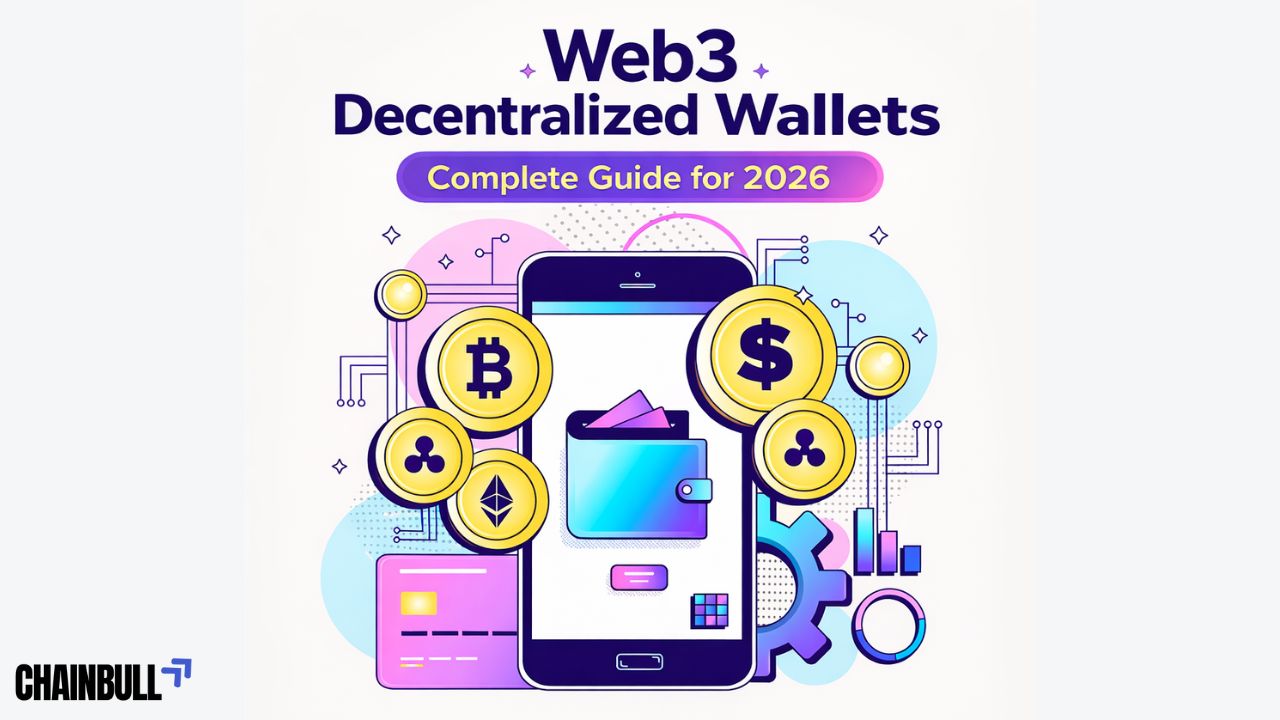
A Web3 wallet is your gateway to the decentralized internet. Unlike traditional banking apps controlled by financial institutions, a Web3 wallet is a digital tool that allows you to store, manage, and interact with cryptocurrencies and digital assets while maintaining complete ownership and control.
Think of it as your personal vault and passport for the blockchain world. Your Web3 wallet holds your private keys—the cryptographic codes that prove ownership of your digital assets—and enables you to interact with decentralized applications (dApps), NFT marketplaces, DeFi protocols, and blockchain networks without intermediaries.
Web3 wallets differ fundamentally from traditional crypto exchange accounts. When you use a Web3 wallet, you control your private keys, meaning you have true ownership of your assets. According to Vitalik Buterin’s foundational principles on blockchain self-custody, no company can freeze your account, and you don’t need permission to make transactions. This principle of self-custody embodies the core philosophy of blockchain technology: giving individuals sovereignty over their digital property.
The wallet interfaces with blockchain networks directly, allowing you to sign transactions, verify your identity, and interact with smart contracts. Whether you’re trading tokens, minting NFTs, or participating in decentralized governance, your Web3 wallet serves as your authentication tool and transaction gateway.
The term “decentralized wallet” emphasizes the non-custodial nature of true Web3 wallets. In a decentralized wallet, no central authority has access to your funds. You alone possess the private keys, and you alone bear responsibility for their security.
When you create a decentralized Web3 wallet, the software generates a pair of cryptographic keys using elliptic curve cryptography, the same security standard used by governments and financial institutions worldwide. Your public key functions like an account number that others can use to send you assets. Your private key acts as your password and signature tool—it proves ownership and authorizes transactions.
The revolutionary aspect is that these keys are generated on your device, not on a company’s server. Your private key never needs to leave your device, and ideally, no one else ever sees it. This architecture eliminates the single point of failure that traditional financial systems have, where a company breach can compromise millions of accounts.
The distinction between decentralized and custodial wallets is crucial. Custodial wallets, typically offered by centralized exchanges, hold your private keys for you. This is convenient but contradicts the fundamental principle of blockchain: self-sovereignty. As the Securities and Exchange Commission has highlighted in various enforcement actions, custodial platforms face regulatory scrutiny and operational risks.
Decentralized wallets put you in the driver’s seat. You face more responsibility, but you gain independence from third-party risks. No company can prevent you from accessing your money, and your assets can’t be seized by a corporate decision.
Web3 wallets come in several forms, each with distinct advantages and trade-offs.
Browser extension wallets like MetaMask, Phantom, and Rabby have become the standard for Web3 interaction. They integrate directly into your web browser, making it seamless to connect with dApps. When you visit a decentralized exchange or NFT marketplace, your extension wallet can connect with one click, allowing you to approve transactions without leaving the website.
These wallets are highly convenient for active users who regularly interact with DeFi protocols or blockchain applications. They support multiple networks, store various tokens, and provide a user-friendly interface for managing digital assets.
Mobile Web3 wallets bring decentralized finance to your smartphone. Trust Wallet, Rainbow, and Coinbase Wallet (in self-custody mode) offer full Web3 functionality on the go. They often include additional features like in-app browsers for dApps, NFT galleries, and integrated DEX swapping.
Mobile wallets are particularly popular because they combine convenience with security. Many use biometric authentication and secure enclave technology built into modern smartphones to protect private keys, as detailed in Apple’s security documentation.
For serious crypto holders, hardware wallets represent the gold standard of security. Devices like Ledger and Trezor store your private keys on specialized hardware that never connects directly to the internet. When you need to sign a transaction, you verify it on the physical device, adding an extra layer of protection against malware and phishing attacks.
Hardware wallets integrate with software interfaces, giving you the best of both worlds: the convenience of browser or mobile wallets combined with the security of offline key storage. Kraken Security Labs research consistently demonstrates that hardware wallets are the most secure option for long-term storage.
The newest evolution in Web3 wallets involves smart contract wallets, also called account abstraction wallets. These wallets are actually smart contracts deployed on the blockchain, offering features impossible with traditional wallet architectures.
Smart contract wallets enable social recovery (friends can help you regain access if you lose your keys), spending limits, multi-signature requirements, and automated transactions. Projects like Safe (formerly Gnosis Safe) and emerging ERC-4337 account abstraction standards are making these advanced features accessible to everyday users. If you’re building custom wallet infrastructure, experienced smart contract developers can implement these advanced features securely.
Creating your first Web3 wallet is straightforward, but doing it securely requires attention to detail. If you need professional Web3 development support for enterprise wallet solutions or custom blockchain integrations, experienced teams can help streamline the process.
Start by choosing a reputable wallet provider. For beginners, MetaMask remains the most widely supported option, though alternatives like Rainbow offer more modern interfaces. Download the wallet only from official sources—fake wallet apps are a common scam vector that the FBI has warned about.
During setup, the wallet will generate a seed phrase, typically twelve or twenty-four words based on the BIP-39 standard. This phrase is the master key to your wallet. Anyone with this phrase can access your funds on any device. The wallet will ask you to write it down and verify you’ve recorded it correctly.
Never take a screenshot of your seed phrase, never store it in cloud services, and never share it with anyone. Write it on paper and store it somewhere secure, preferably in multiple physical locations. Some users engrave their seed phrases on metal plates to protect against fire or water damage.
After securing your seed phrase, you’ll create a password for accessing the wallet application. This password only protects access on that specific device—your seed phrase is what controls the actual assets.
Security in Web3 begins and ends with protecting your private keys. Beyond securing your seed phrase, use strong, unique passwords for your wallet applications. Enable biometric authentication on mobile wallets when available.
Consider using a hardware wallet from the start if you plan to hold significant value. Even if you primarily use a browser extension for daily transactions, storing the bulk of your assets on a hardware wallet minimizes risk—a strategy recommended by Coinbase’s security team.
Be vigilant about the websites you connect your wallet to. Malicious sites can drain wallets through approved smart contracts. Before approving any transaction, verify you’re on the legitimate website, check what permissions you’re granting, and never sign transactions you don’t fully understand. Tools like Etherscan allow you to verify smart contract code and transaction history.
Once set up, your Web3 wallet becomes your interface for the decentralized economy.
Most dApps include a “Connect Wallet” button. Clicking this triggers your wallet to display a connection request following the WalletConnect protocol. This request only asks permission to see your public address—it doesn’t give the site access to your funds. Once connected, you can interact with the dApp’s features.
When you want to perform an action that costs gas or moves assets, the dApp will request a transaction. Your wallet displays the transaction details, including the gas fee, what contract you’re interacting with, and what assets are involved. Review these details carefully before confirming.
Most Web3 wallets support multiple blockchain networks. Ethereum remains the most developed ecosystem, but networks like Polygon, Arbitrum, Optimism, Base, and Solana have grown significantly. Each network has its own tokens, dApps, and fee structures.
Your wallet address typically remains the same across compatible networks (EVM chains share addresses), but your tokens exist separately on each network. Moving assets between networks requires bridging, a process of locking tokens on one chain and minting equivalents on another. Use reputable bridges like Stargate Finance or native bridges documented on L2Beat.
Always verify you’re on the correct network before making a transaction. Sending tokens to an address on the wrong network can result in permanent loss.
Every blockchain transaction requires a gas fee paid to network validators. Gas fees fluctuate based on network congestion—during high activity periods, fees can become prohibitively expensive, especially on Ethereum mainnet. Track current gas prices using ETH Gas Station or Blocknative’s Gas Estimator.
Your wallet allows you to adjust gas settings, choosing between faster (more expensive) and slower (cheaper) confirmation times. For non-urgent transactions, setting lower gas fees can save significant money over time.
Failed transactions still consume gas fees because validators expended computational resources attempting to process them. To avoid failed transactions, ensure you have sufficient token balances, proper token approvals, and realistic slippage settings for swaps.
Understanding threats helps you avoid them.
Phishing represents the most common attack vector in Web3. Scammers create fake versions of popular dApps, DEXes, or NFT marketplaces. When you connect your wallet and approve transactions on these fake sites, you’re actually authorizing the scammer to drain your assets—a threat documented extensively by Chainalysis.
Always verify URLs carefully. Bookmark legitimate sites and use those bookmarks rather than clicking links. Be especially cautious with links in emails, social media messages, or Discord servers. Use Google Safe Browsing to check suspicious links.
Smart contracts require token approvals to move funds on your behalf. When you interact with a DEX or lending protocol, you approve the contract to access specific tokens. Malicious contracts can request unlimited approvals, allowing them to drain your entire balance of that token at any time.
Review what you’re approving before signing. Tools like Revoke.cash allow you to view and revoke existing approvals, removing access from contracts you no longer use or trust. DeFi Safety provides security ratings for major DeFi protocols.
No legitimate project will ever ask for your seed phrase. Support agents don’t need it, airdrops don’t require it, and there’s no situation where sharing your seed phrase is necessary or safe. Anyone asking for it is attempting to steal your assets—tactics documented by the Federal Trade Commission.
Be skeptical of direct messages offering help, investment opportunities, or urgent security warnings. Verify information through official channels before taking action. Check Web3 Is Going Great to stay informed about recent scams and exploits.
Multi-signature (multisig) wallets require multiple private keys to authorize transactions. This is essential for organizations managing treasury funds or individuals seeking extra security. Gnosis Safe pioneered this approach and remains the industry standard for multisig management.
Most software wallets can integrate with hardware devices, combining convenience with security. MetaMask, for example, supports Ledger and Trezor integration, allowing you to manage assets through a user-friendly interface while keeping keys on secure hardware.
Modern Web3 wallets increasingly include portfolio tracking features. However, dedicated tools like Zapper and DeBank provide comprehensive cross-chain tracking. For tax purposes, services like CoinTracker and Koinly integrate with wallets to generate compliant tax reports.
Web3 wallet technology continues evolving rapidly. Account abstraction is removing many current friction points, enabling email recovery, sponsored transactions where you don’t need to own the native token to pay gas, and programmable security features—innovations detailed in Ethereum’s roadmap.
Multi-chain wallets are becoming more sophisticated, with seamless bridging and unified balance views across networks. Integrated DeFi features allow swapping and lending directly within wallet interfaces without visiting separate dApps.
Privacy enhancements are also advancing. While blockchain transactions are public, new protocols like Aztec Network enable confidential transactions that hide amounts and even participants while maintaining verifiability. Zero-knowledge proof research from projects like Zcash is being integrated into mainstream wallets.
The regulatory environment for Web3 wallets is evolving. While self-custody wallets generally fall outside financial regulations, users should stay informed about their jurisdiction’s requirements. The Financial Action Task Force (FATF) provides international guidance, while individual countries develop specific frameworks.
In the United States, FinCEN has issued guidance distinguishing between custodial and non-custodial wallets. Understanding these distinctions helps users navigate compliance requirements while maintaining privacy and control.
For entrepreneurs building wallet solutions or launching tokens that integrate with Web3 wallets, visibility is critical. Strategic crypto marketing services can help you reach your target audience through:
Web3 decentralized wallets represent a fundamental shift in how we think about digital ownership and financial sovereignty. By understanding what Web3 wallets are, how they work, and how to use them securely, you’re preparing yourself for the decentralized future of the internet.
The learning curve may seem steep initially, but the principles become intuitive with practice. Start with small amounts, experiment with different wallet types, and gradually build your understanding. Resources like Ethereum.org’s wallet guide and CoinDesk Learn provide ongoing education as the ecosystem evolves.
The combination of ownership, privacy, and programmability that Web3 wallets enable is genuinely revolutionary—and now you have the knowledge to participate safely and confidently.
Remember: in Web3, you are your own bank. That power comes with responsibility, but it also comes with freedom that traditional financial systems simply cannot offer.
Ready to explore the Web3 ecosystem? Visit Chainbull for the latest updates, market analysis, and educational resources to guide your blockchain journey.

Enter your email → Get instant download.