

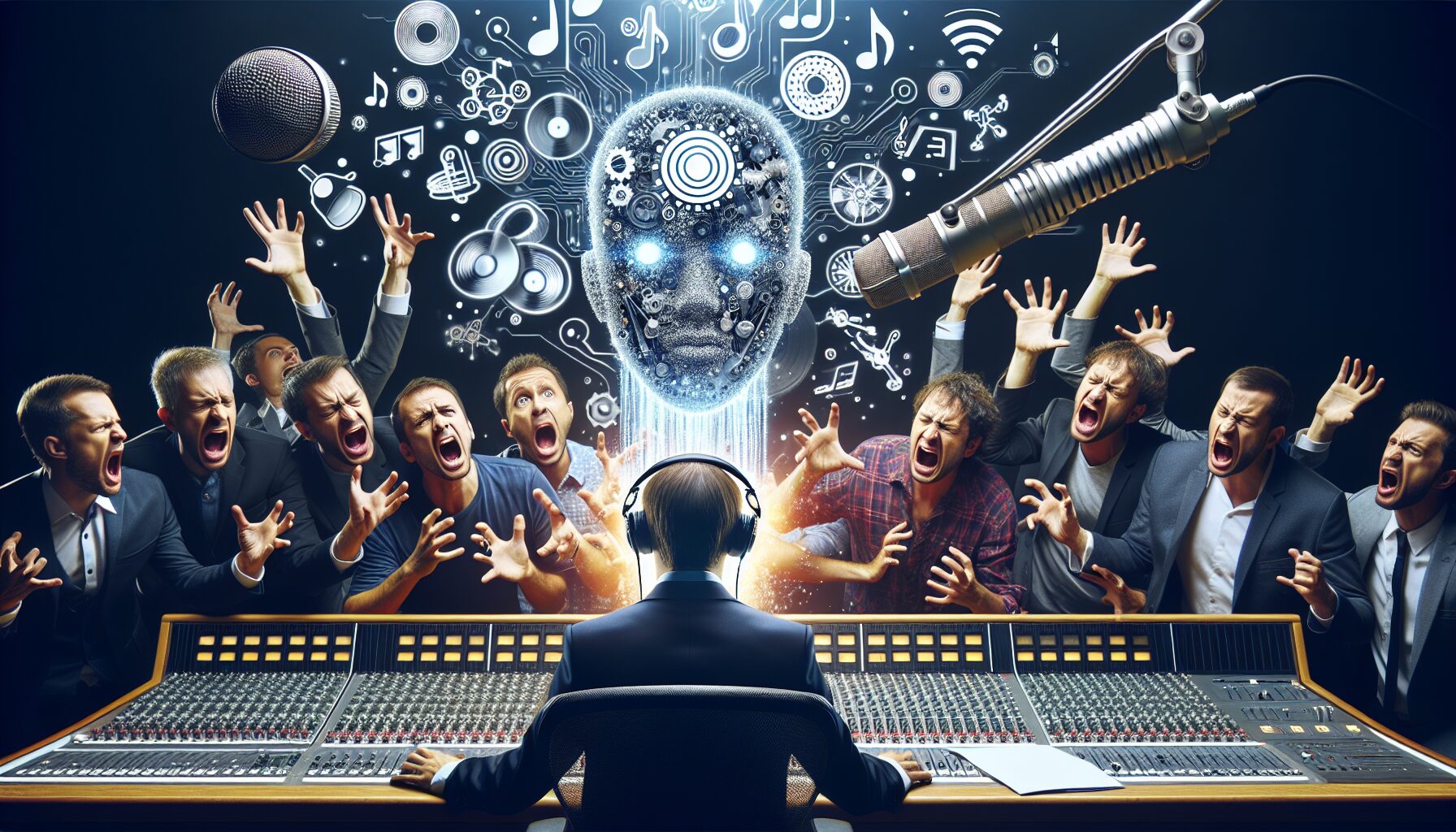
The Rise of Machine-Generated Melodies
Artificial intelligence has quietly revolutionized how music gets created, produced, and distributed across digital platforms. What began as experimental niche projects has evolved into a mainstream phenomenon that’s reshaping the relationship between technology, software innovation, and creative expression. Streaming services now face an unprecedented challenge: managing an influx of algorithmically-composed tracks while determining their place in a traditionally human-driven industry.
The journey from scientific curiosity to commercial reality happened faster than many industry observers anticipated. Early adopters treated generative music technology as an avant-garde playground, pushing boundaries and challenging conventional wisdom about artistic authenticity. Today, the landscape looks dramatically different, with sophisticated AI music tools becoming increasingly accessible to independent creators, startup entrepreneurs, and established musicians alike.
From Experimental Concept to Commercial Reality
The Early Days of AI Musicianship
The experimental phase of AI-assisted music production demonstrated genuine artistic potential. Pioneering musicians leveraged cutting-edge software and machine learning frameworks to explore sonic territories that traditional composition couldn’t easily access. These early innovators viewed AI not as a replacement for human creativity but as a collaborative partner—a technological tool that could generate novel patterns, unexpected chord progressions, and rhythmic combinations worth exploring.
This experimental mindset established a foundation for understanding how generative AI could enhance rather than eliminate artistic vision. Musicians discovered that the real innovation occurred at the intersection of human intention and machine capability, where algorithmic output met creative curation.
The Software Infrastructure Behind AI Music
Modern AI music generation relies on sophisticated deep learning models trained on vast catalogs of existing compositions. These software systems analyze melodic structures, harmonic relationships, and production techniques to generate original musical content. Open-source projects and proprietary platforms now offer musicians unprecedented control over the creative process, allowing them to customize outputs according to their artistic vision.
The technology encompasses multiple approaches: some systems generate complete tracks from scratch, while others focus on specific elements like drum patterns, basslines, or melodic hooks. This granular control represents a significant innovation advantage for creators seeking to maintain artistic agency while benefiting from computational assistance.
The Streaming Platform Dilemma
Digital streaming services face a genuine conundrum. On one hand, they’ve built their business models around content volume and algorithmic curation—metrics that AI-generated music theoretically optimizes. On the other hand, the platform’s relationship with creators, rights holders, and listeners depends on maintaining perceived authenticity and artistic integrity.
The flood of algorithmically-produced tracks presents operational challenges. Without proper curation frameworks, streams become cluttered with derivative, low-quality content that degrades user experience. Platforms must develop sophisticated filtering technology capable of distinguishing between thoughtfully-created AI-assisted works and low-effort content produced purely for monetization purposes.
Industry Response and Market Uncertainty
Artist and Label Perspectives
The music industry’s response remains mixed and evolving. Established record labels worry about revenue implications, copyright complications, and potential market saturation. Independent artists, conversely, view AI tools as democratizing technology that reduces barriers to entry and production costs. The gadgets and software enabling home music production have always shifted power dynamics, and AI represents the next evolutionary step in that technological progression.
Some musicians enthusiastically embrace generative technology as a startup-like opportunity to build unique sonic brands. Others express legitimate concerns about attribution, artistic recognition, and fair compensation when machines handle significant creative responsibility.
Cybersecurity and Rights Management Challenges
Emerging issues surrounding AI-generated music extend beyond creative philosophy into practical governance. Copyright questions loom large: when AI systems trained on existing compositions generate new material, who owns the resulting works? How should platforms implement cybersecurity measures protecting intellectual property in an AI-driven landscape?
These questions lack clear legal precedent, forcing platforms, regulators, and industry stakeholders to develop policies in real-time as technology outpaces existing frameworks.
What Listeners Actually Want
Perhaps the most critical question remains unanswered: do audiences actually want AI-generated music? Consumer behavior data presents a complicated picture. Some listeners enjoy algorithmic compositions for specific use cases—background music, ambient soundscapes, or personalized playlists. Others actively seek out human-created work, viewing authenticity as a core value proposition.
Market segmentation may ultimately define how AI music succeeds or fails commercially. Rather than replacing human artists entirely, AI-generated content might occupy distinct niches where algorithmic advantages actually serve listener preferences.
The Future of AI-Assisted Music Creation
The technology continues advancing rapidly. Next-generation innovations promise more nuanced control, better stylistic fidelity, and improved integration with traditional music production workflows. Rather than representing a final form, current AI music systems represent an early stage of ongoing innovation.
The most sustainable path forward likely involves thoughtful coexistence rather than dominance by either human creators or algorithmic systems. As the technology matures, industry standards will probably emerge establishing clear guidelines for attribution, compensation, and quality thresholds.
Conclusion: Navigating the AI Music Landscape
The explosion of AI music across streaming platforms reflects broader technological disruption patterns affecting creative industries. This innovation challenge demands nuanced responses balancing technological possibility against human artistry, commercial opportunity against ethical responsibility, and progress against preservation of what makes music meaningful to audiences.
The outcome remains uncertain, but one thing seems clear: the music industry will never operate exactly as it did before AI-assisted creation became commercially viable. How stakeholders navigate this transition will determine whether generative music becomes a valuable tool enhancing human creativity or a cautionary tale about technology’s limitations in domains fundamentally rooted in human expression.
Frequently Asked Questions
What exactly is AI-generated music?
AI-generated music uses machine learning algorithms trained on vast catalogs of existing compositions to create original musical content. These software systems analyze melodic structures, harmonic relationships, and production patterns, then generate new music based on learned patterns. Musicians can guide the process by setting parameters for style, tempo, mood, and instrumentation, making AI a collaborative creative tool rather than a purely automated system.
How is the music industry responding to AI music creation?
The industry response is mixed and evolving. Established record labels express concerns about revenue implications, copyright complications, and market saturation, while independent artists increasingly view AI tools as democratizing technology that reduces production costs and barriers to entry. Regulatory frameworks are still developing to address questions about ownership, attribution, and fair compensation when machines assist in creative processes.
Do streaming listeners actually want AI-generated music?
Consumer preferences vary significantly. Some listeners enjoy AI-generated music for specific use cases like background ambiance or personalized playlists, while others actively seek human-created work, valuing authenticity as a core component of musical value. Market segmentation suggests AI content will likely succeed in particular niches rather than replacing human artists entirely across all genres and applications.






