Sony Bank Moves Toward Regulated USD Stablecoin Under GENIUS Act
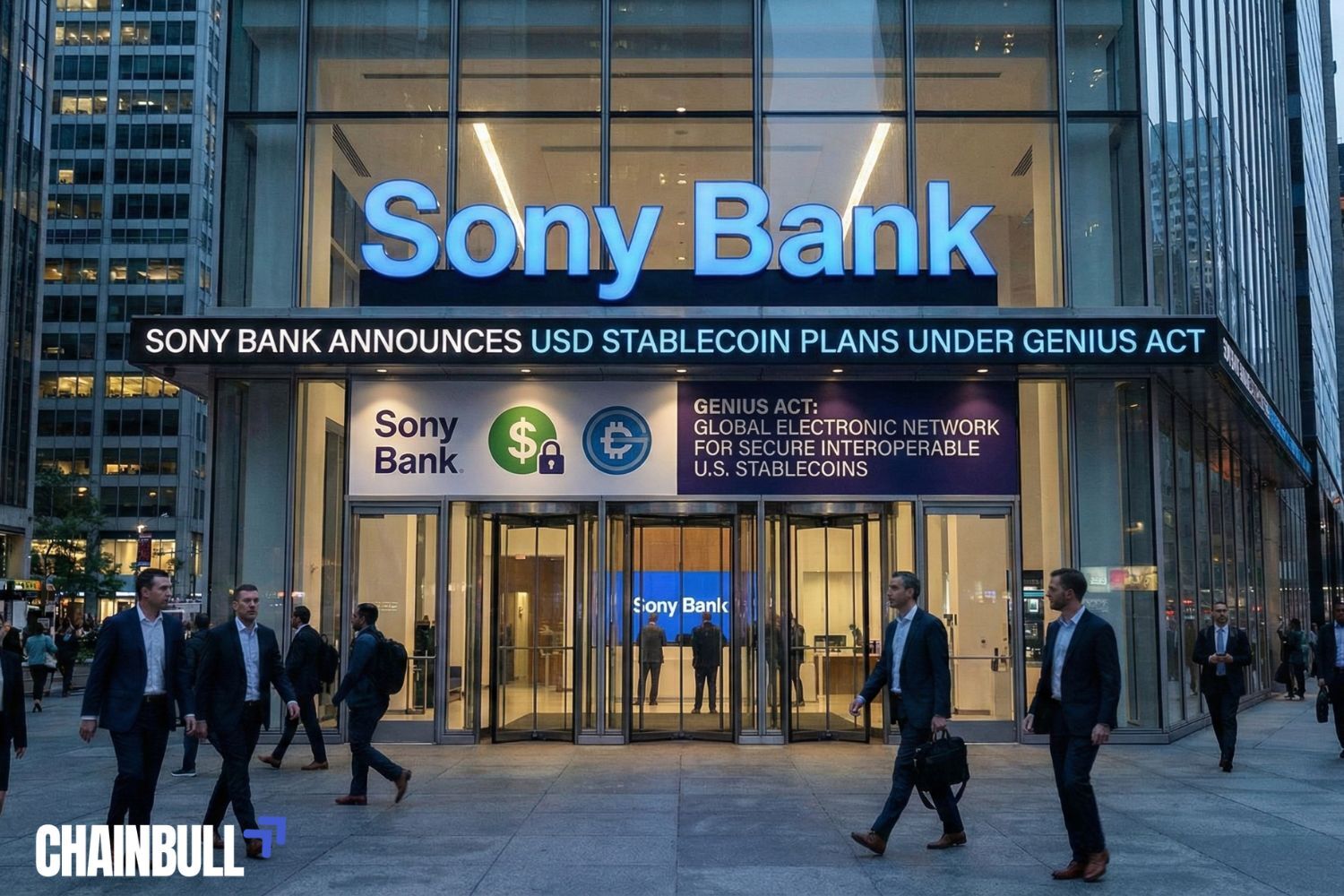
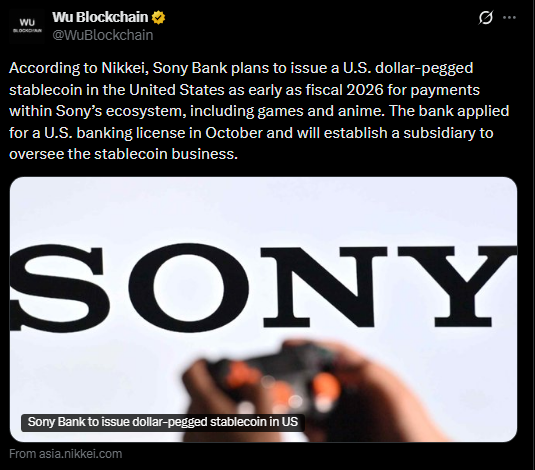
Sony Bank’s push to issue a fully regulated USD-pegged stablecoin marks a significant development in the global digital payments landscape, aligning the company with U.S. federal standards while leveraging the wider Sony ecosystem. Through its U.S. subsidiary Connectia Trust, which is applying for a national bank charter, Sony is transforming entertainment, gaming, and financial services into one connected world powered by blockchain settlement rails that are designed for large-scale usage.
Regulatory Push Under the GENIUS Act
Sony’s conformity with the U.S. GENIUS Act of 2025 grants a stablecoin issuance supervised by the federal government and backed 1:1 by highly liquid dollar assets like cash and Treasury bills. The law requires reserve attestations every month and annual audits for bigger issuers, thus providing Sony with the regulatory clarity necessary for scaling its business without the need to deal with different state-level rules.
Moreover, the ban on interest payments on stablecoin holdings helps to clearly identify the coin as a payment instrument rather than an investment product. As a result, it matches perfectly with Sony’s declared ambition of facilitating digital settlements and cross-border transactions not only in the entertainment industry but also in the entire global ecosystem.
Soneium and BlockBloom Power Web3 Strategy
The blockchain architecture of Sony, which is mainly supported by the Soneium Layer 2 network and its Web3 subsidiary BlockBloom, is the fundamental technical infrastructure for the next-generation stablecoin and other new digital currency-related projects. The Soneium project, which is based on the Optimism OP Stack with EVM compatibility, has had more than 170 projects since its launch and thus can provide transactions that are both scalable and low-cost for the entertainment and gaming sectors.
BlockBloom, an independent unit of Sony Bank, is not affected by regulated operations and thus helps Sony get involved in digital wallets, NFT marketplaces, and Web3 consulting, while also reducing compliance risks. By working with fintech companies and integrating with Soneium, it demonstrates Sony’s capability to innovate while adhering to regulations.
Cross-Ecosystem Integration Drives Adoption
The ambitions of Sony to have a stablecoin are very much dependent on their entertainment pillars—PlayStation, Sony Music, and Sony Pictures, which in turn offer huge built-in audiences for blockchain-enabled payments and digital assets. Sony Pictures, for example, has already run NFT campaigns on Soneium for movies like 28 Days Later and Twisted Metal, giving out fan rewards and collectible experiences.
Sony Music went ahead to trial the concept of tokenized tracks and digital art, thus opening new monetization avenues for artists. PlayStation is a good brand to be at the forefront of stablecoin payments as a future gateway of in-game purchases, digital content transactions, and machine-to-machine settlements across Sony hardware, a model that has already been proven in major gaming ecosystems. The interlinked moves serve to emphasize how Sony is planning to merge payments, content, and user engagement in one single blockchain-ready infrastructure.
Stay Ahead with Chainbull
Crypto evolves every second—make sure you don’t miss a beat. Visit Chainbull for expert insights, detailed market breakdowns, and trusted updates from the world of blockchain and digital assets.