

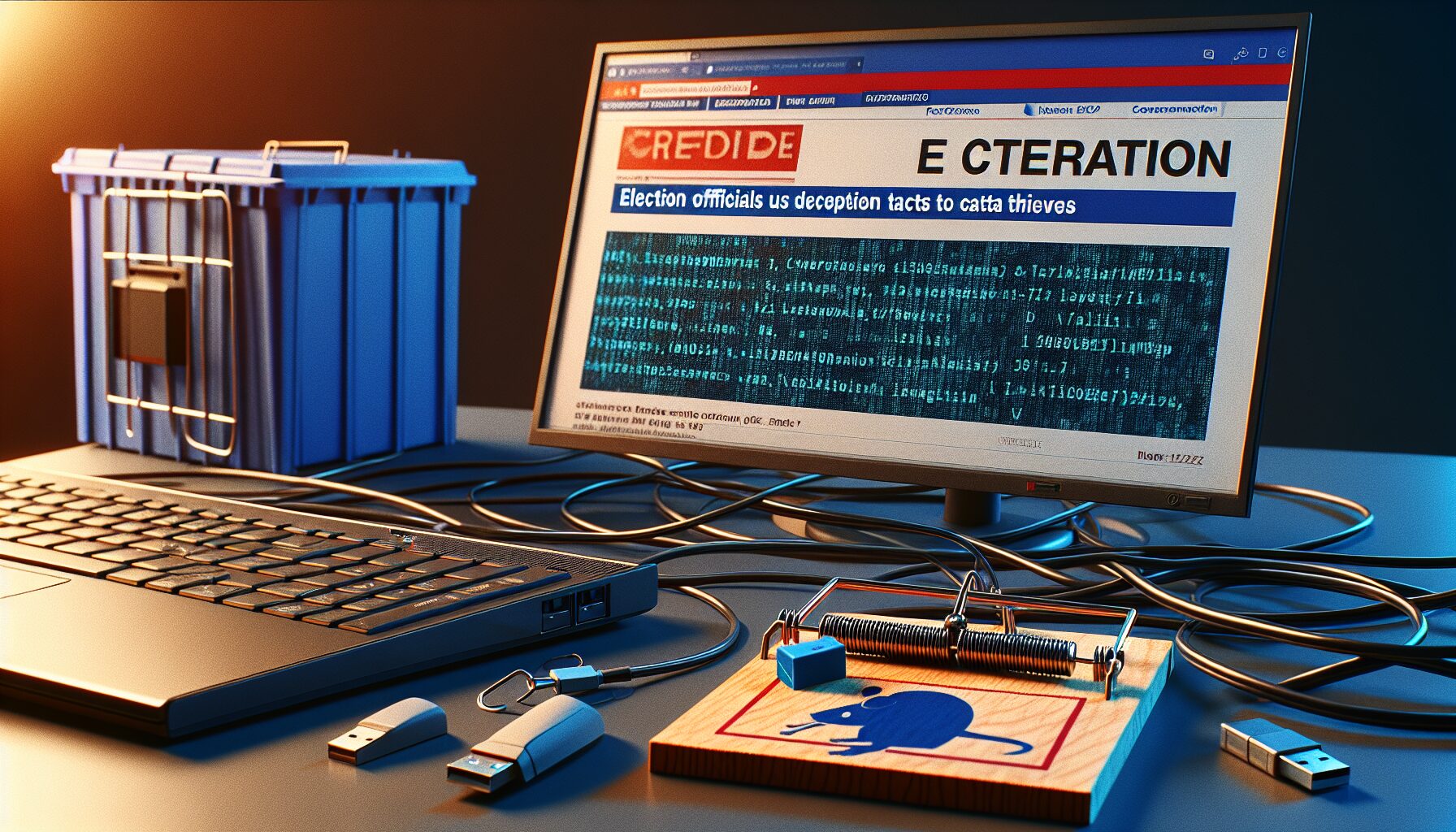
A Timeless Cybersecurity Strategy Emerges in Modern Elections
In an era dominated by cutting-edge cybersecurity innovation—from biometric authentication systems to quantum-resistant encryption protocols—government agencies protecting sensitive citizen data often overlook the most elegant solutions. Recent developments in Canada reveal that election officials are deploying an unexpectedly effective approach rooted in classic counterintelligence tradecraft: the canary trap.
This deceptively simple yet remarkably powerful technique demonstrates that sophisticated technology doesn’t always trump clever strategy when it comes to protecting critical infrastructure and personal information.
What Is a Canary Trap, and Why Does It Matter?
Understanding the Basics
A canary trap operates on a straightforward principle: deliberately introduce minor, individualized alterations into sensitive information before distributing it to multiple parties. Each version contains unique modifications that serve as digital fingerprints. Should the data appear in an unauthorized disclosure, these embedded markers immediately reveal which recipient compromised the information.
Think of it as creating custom versions of a document where Person A receives slightly different details than Person B, though the core information remains identical. The moment those personalized elements surface publicly, investigators know exactly where the breach originated.
Historical Roots in Espionage
While this methodology rarely captures mainstream headlines, intelligence agencies and security professionals have relied on canary traps for decades. The technique appears frequently in spy novels and declassified intelligence reports because it works—both as a detection mechanism and as a powerful deterrent against potential leakers within organizations.
The strategy transcends traditional cybersecurity gadgets and software solutions, instead leveraging human behavior and information distribution patterns.
Election Security Meets Tradecraft
Canadian Implementation
Election commission officials in Canada recently demonstrated the real-world application of canary traps within their voter registration and database management systems. Rather than relying exclusively on firewalls, encryption standards, and access controls, these agencies introduced subtle variations into electoral records distributed to various authorized personnel and contractors.
This approach complements—rather than replaces—conventional cybersecurity infrastructure, creating a multi-layered defense strategy that addresses both technological vulnerabilities and insider threats.
Effectiveness Against Modern Threats
The innovation proves particularly valuable against a specific category of security breaches: internal compromises where authorized users deliberately leak information. While sophisticated gadgets and software monitor network activity and detect unauthorized access attempts, they cannot easily distinguish between legitimate access and malicious intent from someone with proper credentials.
Canary traps fill this critical gap by making it impossible for a leaker to distribute stolen data without revealing their identity through the unique markers embedded throughout.
Complementing Modern Cybersecurity Innovation
A Hybrid Defense Approach
Election databases protecting millions of Canadian voters employ multiple protective layers. Quantum-safe algorithms and public-key cryptography secure data in transit and at rest, while sophisticated access controls and authentication protocols govern who can view sensitive information. The canary trap adds another dimension entirely.
This hybrid methodology represents sophisticated cybersecurity innovation that recognizes both technological and human elements of information security. Technical solutions address automated threats and external attackers, while the canary trap identifies compromised insiders who might otherwise evade detection.
Startup and Enterprise Applications
Beyond electoral systems, organizations ranging from tech startups protecting proprietary research to enterprise corporations guarding trade secrets increasingly recognize the value of canary trap methodologies. The approach requires minimal financial investment compared to advanced software solutions, yet often proves more effective for detecting specific breach categories.
This accessibility makes canary traps particularly appealing for organizations with limited cybersecurity budgets seeking maximum protection effectiveness.
Why Simplicity Sometimes Trumps Complexity
The Psychology of Deterrence
One reason canary traps work so effectively is psychological. Potential leakers knowing that customized markers exist within distributed information become significantly less likely to attempt theft. The certainty of identification creates a powerful deterrent that even advanced technology cannot replicate.
Cost-Benefit Analysis
Implementing canary traps requires minimal infrastructure investment. No specialized gadgets, expensive software licenses, or complex technical implementations are necessary. Organizations can deploy this strategy immediately across existing systems, making it a highly efficient addition to cybersecurity portfolios.
Lessons for Data Protection Strategies
The Canadian election database implementation offers valuable lessons for organizations across industries. Effective cybersecurity doesn’t always require the most sophisticated innovation available. Sometimes the most powerful strategies combine elegant simplicity with strategic thinking.
As cyber threats continue evolving, institutions responsible for protecting sensitive voter data and other critical information must balance technological solutions with proven counterintelligence methodologies. The canary trap represents a proven tool that deserves prominent placement in modern security frameworks.
FAQ Section
How does a canary trap differ from standard encryption?
Encryption protects data from unauthorized access by making it unreadable without proper keys. Canary traps assume authorized access and instead focus on identifying which authorized person leaked information. They serve complementary purposes within comprehensive security strategies—encryption prevents unauthorized access, while canary traps catch insiders who abuse legitimate access.
Can sophisticated leakers defeat canary traps?
Potentially sophisticated individuals might attempt to obscure the trap’s markers by modifying information before distribution. However, this approach requires knowing exactly which elements are unique, making detection incredibly difficult. The uncertainty itself deters most would-be leakers, making the methodology highly effective in practice.
Why haven’t more organizations adopted canary traps?
Many organizations focus heavily on technological solutions and overlook elegant low-tech strategies. Additionally, implementing canary traps requires careful planning to create convincing variations without compromising data integrity. As awareness increases, adoption will likely expand across sectors handling sensitive information.
Frequently Asked Questions
How does a canary trap differ from standard encryption?
Encryption protects data from unauthorized access by making it unreadable without proper keys. Canary traps assume authorized access and instead focus on identifying which authorized person leaked information. They serve complementary purposes within comprehensive security strategies.
Can sophisticated leakers defeat canary traps?
Potentially sophisticated individuals might attempt to obscure markers by modifying information before distribution. However, this requires knowing exactly which elements are unique, making detection incredibly difficult. The uncertainty itself deters most would-be leakers.
Why haven't more organizations adopted canary traps?
Many organizations focus heavily on technological solutions and overlook elegant low-tech strategies. Additionally, implementing canary traps requires careful planning to create convincing variations without compromising data integrity. Adoption is likely expanding as awareness increases.






