

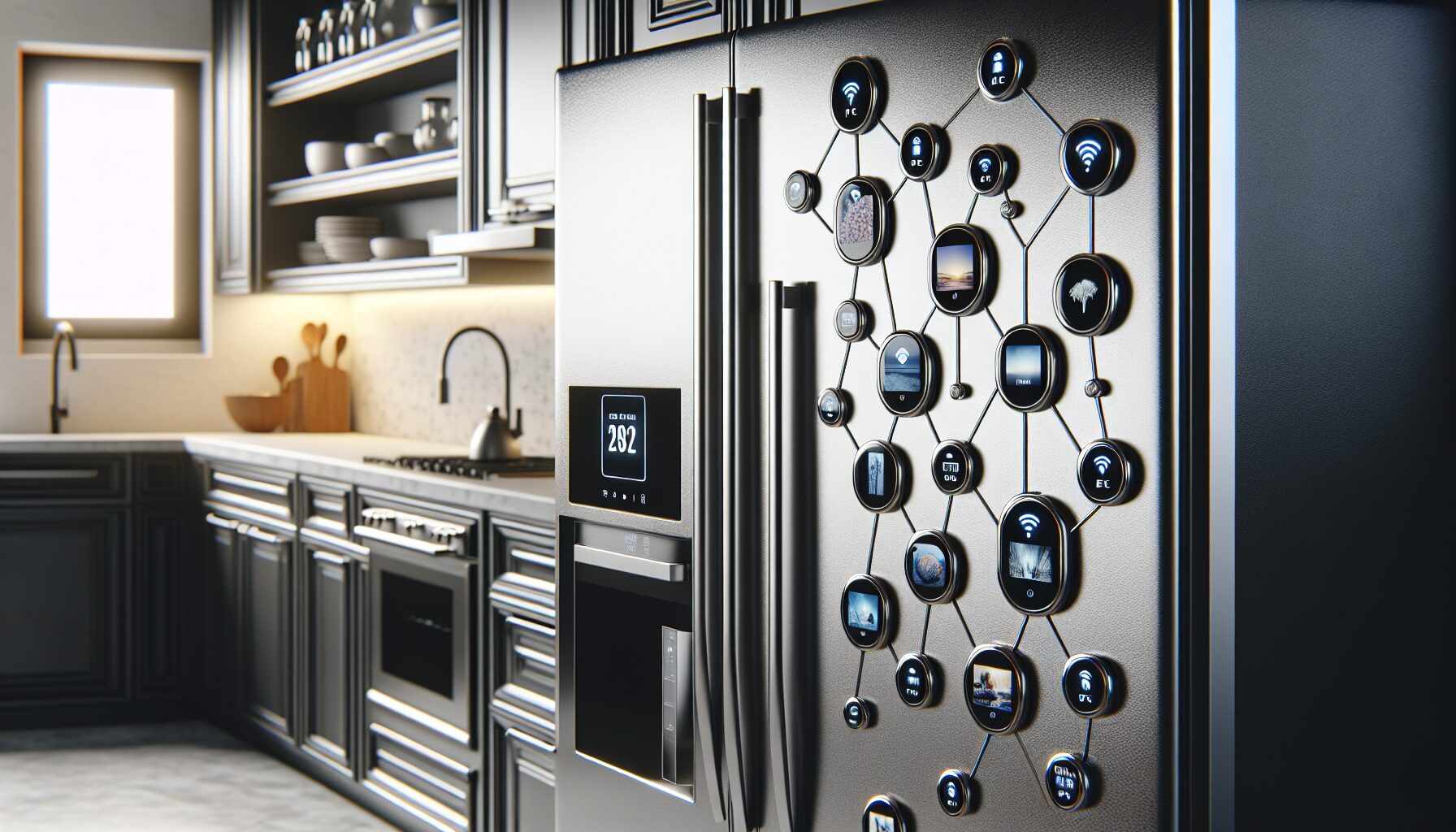
NFC E-Ink Fridge Magnets Bring Digital Photo Storage Into the Connected Home
The humble refrigerator door has long served as a personal gallery—a curated display of life’s cherished moments preserved through printed photographs. Yet as our memories increasingly exist in digital form, the friction between capturing moments on smartphones and displaying them physically has remained largely unsolved. A wave of emerging startup innovations is now addressing this gap through connected gadgets that blend physical display technology with wireless data transfer, offering consumers a compelling middle ground between impermanent digital archives and expensive instant film.
The Evolution of Fridge Door Displays
Decorating refrigerators with photographs represents more than mere nostalgia—it’s a deeply human impulse to surround ourselves with tangible reminders of relationships, adventures, and milestones. Traditional instant cameras provided an appealing solution for decades, creating physical artifacts with character and immediacy. However, the economics of instant film have shifted dramatically. Premium film stocks now command substantial costs, quality remains inconsistent, and the environmental footprint of single-use chemistry continues growing.
Contemporary technology offers an alternative pathway. Rather than printing digital images, innovative companies are now embedding sophisticated display hardware directly into refrigerator magnets, creating reusable digital surfaces that update wirelessly without requiring traditional power sources.
How NFC Technology Enables Battery-Free Updates
Near Field Communication represents one of technology’s most underutilized innovations in consumer applications. Most smartphone users encounter NFC through contactless payments, yet the same fundamental principle—wireless data transfer over extremely short distances—can revolutionize how we interact with physical objects throughout our homes.
The mechanics are straightforward: users position their smartphone against the magnet, triggering a brief wireless handshake that transmits image data. The companion software application handles all necessary processing, including cropping, filtering, and format optimization. What distinguishes this approach from conventional digital photo frames is the absence of external charging requirements.
Understanding E-Ink Display Architecture
E-Ink technology represents a remarkable achievement in display innovation. Unlike liquid crystal displays that continuously consume power to maintain images, electronic paper relies on microscopic capsules containing pigmented particles suspended in fluid. Once an image forms through electromagnetic manipulation of these particles, the display maintains that image indefinitely without additional power consumption.
This fundamental characteristic enables exceptionally long operational lifespans—some e-readers function for months on a single charge. The magnets employ specialized color-capable E-Ink variants originally developed for retail applications, specifically electronic shelf labels found throughout grocery stores and retail environments. Repurposing this existing display technology represents an elegant example of innovation through component optimization rather than entirely new development.
Color Fidelity and Visual Limitations
The tradeoff inherent in this approach centers on color reproduction. Retail-grade E-Ink panels display black, white, red, and yellow—a deliberate limitation optimized for price and power consumption. Photographs containing blue and green hues experience significant desaturation, though the resulting aesthetic actually evokes the distinctive color palette of vintage instant photography, creating an unexpectedly charming visual effect.
The accompanying software mitigates this limitation through a sophisticated preview system. Before committing to a transfer, the application displays precisely how images will render on the four-color substrate, allowing users to make informed decisions about which photographs translate effectively. Users quickly develop intuition regarding image selection—high-contrast photographs with warm color palettes consistently perform optimally, while those depending on cool tones may disappoint.
Practical Considerations for Implementation
Installing these magnets requires minimal setup beyond downloading the accompanying application. The NFC alignment process demands precision—antennas must position within millimeters of each other, and smartphone cases frequently prove too thick for reliable communication. Devices removed from protective covers enable successful transfers, though this introduces minor friction into the update workflow.
Screen refresh duration—approximately twenty-five to thirty seconds per update—represents another consideration. The technology prioritizes image quality over speed, as the sophisticated color-capable variants require extended refresh cycles compared to monochromatic alternatives. This temporary delay proves negligible for practical use cases, though it differs markedly from the instantaneous image updates users expect from conventional displays.
Display optimization favors well-lit environments. The protective plastic covering that prevents physical damage to the E-Ink surface also introduces glare and reflection, particularly in direct sunlight or low-ambient-light scenarios. Strategic placement—avoiding direct lighting angles—substantially improves visibility and color perception.
The Broader Innovation Landscape
These connected magnets represent a broader startup movement toward reimagining domestic spaces through semiconductor innovation and wireless connectivity. The gadgets exemplify how emerging companies solve practical problems by combining existing technologies in novel configurations rather than requiring entirely revolutionary breakthroughs.
From a sustainability perspective, the approach offers meaningful advantages. Eliminating the consumable aspect of instant film reduces ongoing material waste while delivering superior economic value over extended timeframes. The battery-free operation sidesteps the environmental concerns associated with regularly disposing and replacing power cells.
Market Positioning and Competitive Landscape
These products occupy an interesting market niche. Pricing typically ranges from thirty to forty dollars per unit, positioning them below conventional digital photo frames while remaining above traditional printed photographs. This strategic positioning appeals to consumers seeking middle-ground solutions—those frustrated by film costs and environmental concerns, yet skeptical of larger, power-hungry digital displays.
Purchasing multiple units to create gallery walls proves economically feasible, encouraging broader adoption. Multi-packs offer modest discounts, making comprehensive fridge decoration accessible to budget-conscious consumers seeking to maximize their visual impact without excessive expenditure.
Conclusion: Bridging Physical and Digital Memory
As our lives increasingly unfold through digital devices, maintaining physical touchpoints with meaningful memories becomes increasingly valuable. These NFC-enabled E-Ink magnets successfully bridge the divide between our connected digital lives and the tactile, spatial nature of physical spaces. While color fidelity limitations and practical operational constraints exist, the innovation addresses genuine consumer needs—affordable, sustainable, and convenient memory display that integrates seamlessly into existing homes.
The refrigerator door continues evolving as a meaningful domestic canvas. These connected gadgets suggest that the future of memory display lies not in replacing physical photographs entirely, but in creating more flexible, sustainable, and economically accessible alternatives that honor both technological progress and timeless human impulses to surround ourselves with life’s meaningful moments.
Frequently Asked Questions
How do NFC E-Ink magnets update without charging cables?
E-Ink display technology maintains images indefinitely through electrostatically-arranged pigmented particles that require no continuous power. Updates occur through brief NFC wireless transfers when smartphones are positioned against the magnet. This battery-free operation contrasts sharply with traditional LCD displays that continuously consume power to refresh images.
Why is color reproduction limited to black, white, red, and yellow?
These magnets utilize repurposed retail E-Ink panels originally designed for grocery store price labels. This component choice reduces costs substantially while delivering the battery-free functionality central to the product's value proposition. The limited palette surprisingly creates an aesthetic reminiscent of vintage instant photography.
What smartphone features are required for NFC compatibility?
Most modern smartphones manufactured after 2015 include NFC hardware, including iPhones 6s and newer, plus the vast majority of Android devices. Successful transfers require positioning the phone's NFC antenna millimeters from the magnet's corresponding antenna, typically located in the lower left corner. Phone cases frequently interfere with this proximity requirement.






